Unit 5Human physiology
Hormones and chemical coordination
Trace hormone signals from glands to target cells and use feedback to explain their regulation.
Lesson animations
All animationsHormones find matching receptors
A circulating peptide hormone docks at a matching surface receptor, triggering a signal inside the target cell.
Detailed lesson
Read the direction of hormonal feedback
In the thyroid axis, the hypothalamus releases TRH, which promotes TSH release from the anterior pituitary. TSH stimulates the thyroid to produce thyroid hormones. Increasing levels of thyroid hormones normally reduce upstream signalling through negative feedback. Follow the positive effects down the axis and the inhibitory effect back up it.
Receptor location helps determine response
A water-soluble peptide hormone often binds a receptor on the plasma membrane and initiates signals inside the cell. Many steroid hormones cross the membrane and bind an intracellular receptor, which can change transcription. In either case, the receptor and the receiving cell's machinery determine the response. The hormone's presence in the blood does not mean every cell responds.
Worked example
Predict a feedback response in a model
Imagine a classroom model in which thyroid-hormone output suddenly falls but the hypothalamus and pituitary still work normally. The feedback signal they receive is weaker, so the model predicts increased stimulation of the thyroid through TSH. This illustrates the direction of negative feedback when a downstream signal falls.
Quick revision
- Negative feedback opposes a change in the regulated signal.
- A target cell needs a suitable receptor to respond to a hormone.
Step-by-step guide
Signal and receptor
Endocrine glands release hormones into blood. A hormone affects cells with suitable receptors. Many peptide hormones bind surface receptors and act through second messengers. Steroid and thyroid hormones typically act through intracellular receptors that influence gene expression.
Read all steps
- Signal and receptor
Endocrine glands release hormones into blood. A hormone affects cells with suitable receptors. Many peptide hormones bind surface receptors and act through second messengers. Steroid and thyroid hormones typically act through intracellular receptors that influence gene expression.
- Control from the brain
The hypothalamus acts through releasing hormones and produces ADH and oxytocin, which the posterior pituitary releases. The anterior pituitary releases hormones including GH, TSH, ACTH, FSH, LH and prolactin. Pineal melatonin contributes to biological rhythms. Negative feedback often limits the release of upstream hormones.
- Hormone targets
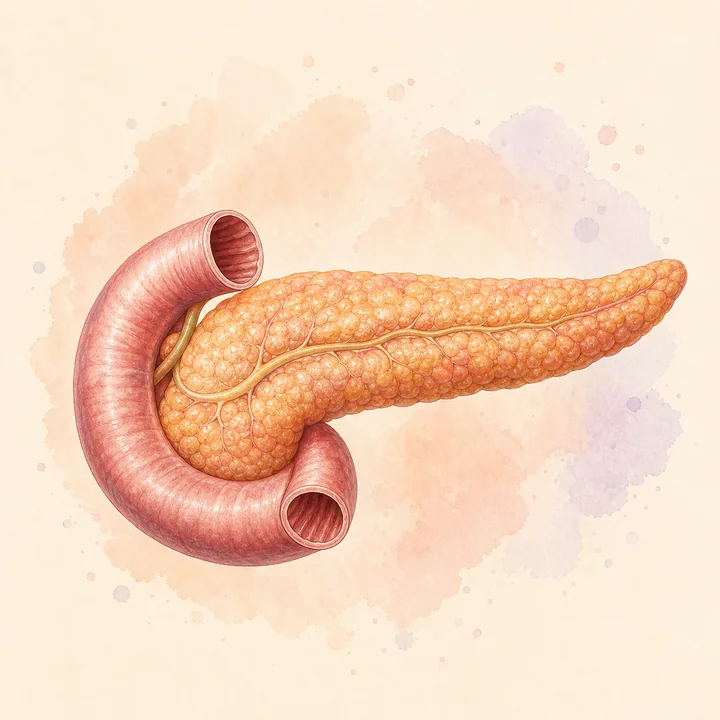
Thyroid hormones support metabolism and development; parathyroid hormone raises blood calcium. Adrenal cortex hormones include cortisol and aldosterone; adrenaline from the medulla aids acute responses. Pancreatic insulin lowers blood glucose and glucagon raises it. Gonadal hormones such as testosterone, oestrogens and progesterone regulate reproductive functions.
- Too little or too much
Low childhood GH can restrict growth, whereas excess in adults can cause acromegaly. Untreated congenital thyroid underactivity can impair development. Goitre means thyroid enlargement, and Graves disease may cause overactivity and protruding eyes. Diabetes mellitus disrupts glucose regulation. Addison disease involves adrenal cortex hormone deficiency.
NEET practice question
+4 correct · −1 incorrect · 0 skipped